


Two coffee wood chews can share the same size chart and still perform completely differently once a dog starts chewing. The difference often traces back to a single overlooked factor: how old the source tree was when it was cut.
CWDC Vietnam builds its entire raw material policy around tree age. Here is why that decision matters, and what it means for a bulk buyer evaluating suppliers.
Why Younger Wood Cannot Match the Density Buyers Expect
Coffee trees grow in density and grain tightness over time. A young tree, still in its productive coffee-bearing years, produces softer branch wood with wider grain rings and higher moisture content.
Chews made from this immature wood tend to wear down faster. They also splinter more easily under sustained chewing pressure, which creates a safety concern rather than just a durability one.
Consequently, CWDC Vietnam only sources branch wood from coffee trees that have passed twenty years of age. By that point, the tree has stopped yielding coffee beans efficiently and is naturally due for replacement on the farm.
Why This Sourcing Model Is Also a Sustainability Story
Farmers in Vietnam’s Central Highlands routinely replace aging Robusta coffee trees to keep yields high across their land. Without a secondary use, that mature wood becomes agricultural waste, often burned or left to decompose.
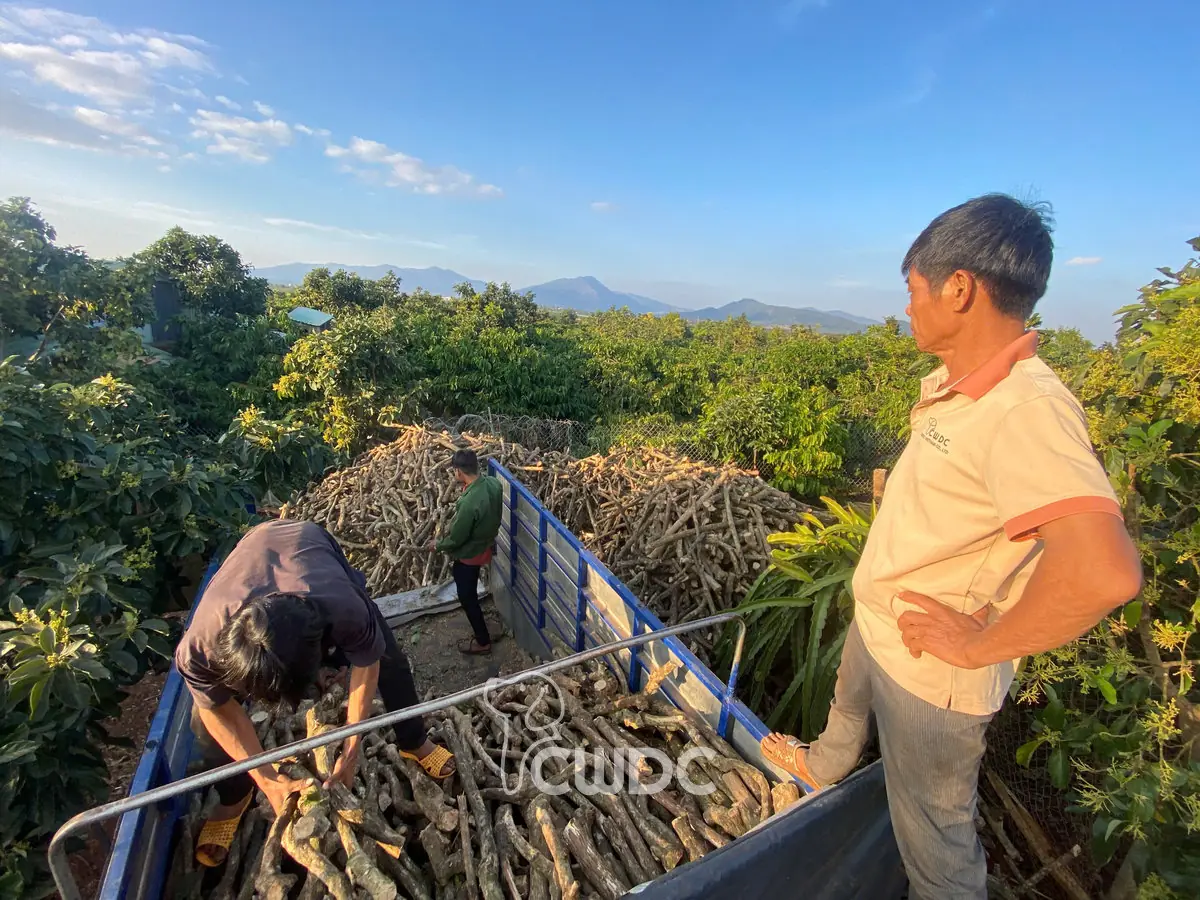
CWDC Vietnam intercepts that wood before disposal and converts it into export-grade dog chews. This means no virgin timber gets cut specifically for our product line, which matters increasingly to retailers marketing sustainability to their own customers.
Additionally, this sourcing model connects directly to the coffee farming calendar. Supply follows the natural replacement cycle of working farms, not a separate logging operation set up purely for pet product manufacturing.
How Age Translates Into Measurable Chew Performance
Older branch wood carries a tighter, more compact grain structure. That density is what gives a finished chew its resistance to splintering and its extended chew life.
The wood is also naturally more termite-resistant at this age, since mature hardwood develops chemical defenses that younger wood has not yet built up. This matters for storage stability during long transit times and warehousing before retail sale.
Furthermore, harder wood holds its shape better under repeated chewing pressure. A chew that softens too quickly loses its dental cleaning benefit, since the abrasive action against a dog’s teeth depends on the wood retaining some structural resistance.
How This Standard Applies Across Every Size We Produce

CWDC Vietnam produces coffee wood dog chews across nine distinct sizes, from a small XXS piece for puppies to a large XXXL piece for bigger breeds. The twenty-year age requirement applies uniformly across every one of them.
This matters for importers ordering a mixed-size container. A buyer should not have to worry that smaller sizes were sourced from younger, more readily available wood just to fill an order faster. At CWDC Vietnam, the age standard does not flex based on size or order volume.
As a result, a mixed pallet arriving at a retail warehouse delivers the same density and durability standard across every size on the shelf, not just the flagship size featured in marketing photos.
How Branch Sourcing Fits Into the Age Requirement
Standard coffee wood dog chews at CWDC Vietnam come from branch sections only, never trunk material. Branch wood offers a more consistent density profile along its length, which makes size grading more predictable once the age requirement is already met.
This is different from products like Gorilla Coffee Wood Chew or Java wood bird playstands, which use both branch and trunk sections for structural reasons specific to those designs. For a standard chew, branch-only sourcing combined with the twenty-year age minimum produces the most consistent result batch after batch.
What to Ask a Supplier About Raw Material Age
First, ask how the supplier verifies tree age at the point of purchase from farmers. A vague answer suggests the supplier is not tracking this variable closely.
Second, ask whether the supplier sources reactively, buying whatever wood is available, or works within a planned harvest cycle tied to farm replacement schedules. The second approach produces far more consistent raw material.
Finally, ask to see or feel a sample. Properly aged coffee wood has a noticeably denser, heavier feel for its size compared to younger wood cut prematurely to meet demand.
Sourcing Coffee Wood Dog Chews From CWDC Vietnam
CWDC Vietnam has built its entire dog chew line around mature, branch-only coffee wood sourced from trees over twenty years old. This standard applies to every batch, regardless of order size.
For importers evaluating raw material quality before a bulk order, this sourcing discipline is worth understanding in detail. Explore our Coffee Wood Dog Chew range to see current size options, learn about how CWDC Vietnam grew from a household workshop into an export manufacturer, and review our commitments to sustainable sourcing before your next order.


