


Importers researching Java wood bird playstands often start with the same question. What separates a playstand that lasts for years from one that cracks or wobbles within months? The answer starts long before assembly, at the moment a supplier selects raw material.
CWDC Vietnam builds every playstand around a specific sourcing decision. This guide walks through that decision, and what a buyer should verify before placing a bulk order.
Why Branch Selection Is the First Quality Checkpoint
A Java wood bird playstand is not one uniform piece of wood. It combines two distinct sections, each doing a different job. Getting this combination right determines whether the finished product holds up under daily use.
The vertical support structure comes from trunk sections of aged coffee trees. Trunk wood carries the density and load-bearing strength a freestanding playstand needs to stay stable. Without this dense core, a tall playstand becomes top-heavy and prone to tipping.
The branch sections attached to that trunk become the actual perches. Branches offer the natural variation in diameter and texture that makes a playstand valuable to the bird using it, not just to the buyer purchasing it.
Why Both Branch and Trunk Matter for This Product Specifically
Standard coffee wood dog chews come from branch material only, since a chew does not need structural load-bearing strength. Bird playstands are different. They require both branch and trunk sections working together in a single piece.
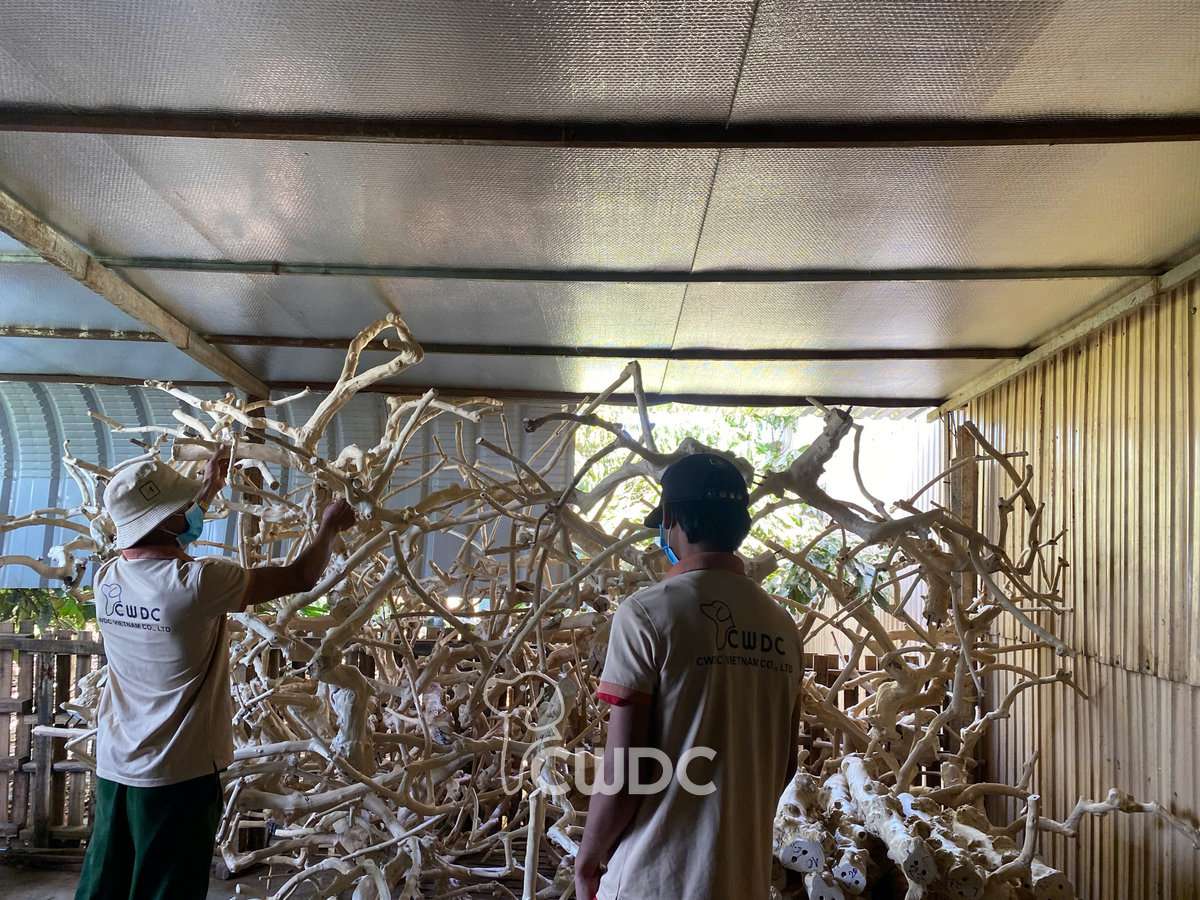
This means our selection team cannot simply grab any coffee wood on hand. Each piece must come from a tree section where the trunk-to-branch transition is intact and structurally sound. That requirement narrows the usable material significantly.
As a result, not every harvested tree yields playstand-grade material. Sections that lack the right trunk-branch structure get redirected to other product lines instead, such as standard dog chews or coconut coir toys.
Why Harvest Timing Limits Available Supply
Java wood sourcing follows the coffee farming calendar in Vietnam’s Central Highlands. Coffee trees are typically replaced after twenty or more years of productive yield, once bean production declines.
This replacement happens during a specific post-harvest window each year, not continuously. Consequently, playstand-grade trunk-and-branch sections become available only during that window, then disappear until the next cycle.
Therefore, importers planning a private label launch around this product should build sourcing timelines around this seasonal constraint. A supplier who can explain this limitation clearly is more likely sourcing real seasonal material, not stockpiled inventory of unknown age.
On the other hand, a supplier who claims unlimited year-round availability of this exact material is worth questioning further.
Why Natural Variation Is a Feature, Not a Defect
First-time buyers sometimes assume that no two playstands looking identical signals inconsistent manufacturing. For this product, the opposite is true.
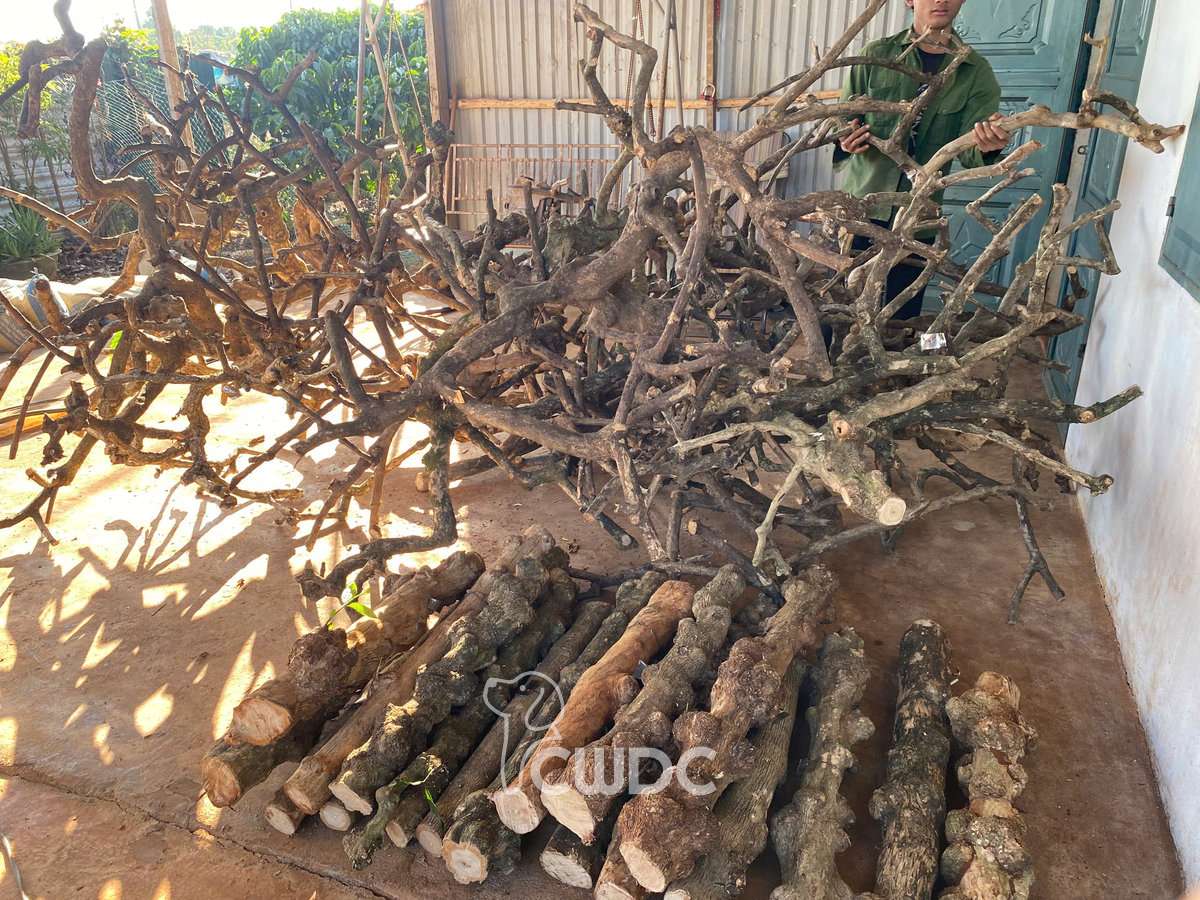
Branches are left largely unaltered during sourcing to preserve their natural curves and varying diameter. This variation replicates what a bird would encounter perching on a real tree, which supports healthier foot grip than a uniform manufactured perch.
Additionally, this natural variation gives private label buyers a genuine differentiation story for retail. A product built from consistent, mass-produced dowels cannot make the same claim.
How Size Determines Drying Method for This Product
Finished playstands fall into our large product classification, given their overall height and the density of the trunk base. Consequently, every Java wood bird playstand goes through kiln drying rather than natural air drying.
Kiln drying removes moisture evenly from the dense trunk core, not just the surface. This step matters more for playstands than for smaller products, since a large, dense base retains moisture longer if dried incorrectly.
A playstand shipped with hidden internal moisture risks mold or warping during a long ocean transit. Controlled kiln drying before packing reduces that risk substantially.
Questions to Ask Before Placing a Bulk Order
First, ask whether the supplier sources trunk-and-branch sections directly or purchases pre-cut material from a third party. Direct sourcing allows tighter control over which pieces qualify.
Second, ask how the supplier handles the seasonal availability window. A vague answer often signals a trading company reselling from inconsistent sources rather than a manufacturer with direct access to raw material.
Third, ask specifically about drying method for the trunk base. Larger, denser sections require different handling than smaller branch material, and a supplier should be able to explain that difference clearly.
Finally, ask about packaging and labeling options if you are building a private label program. A manufacturer confident in its process typically offers flexibility here as a standard service, not a special request.
Sourcing Java Wood Bird Playstands From CWDC Vietnam
CWDC Vietnam manufactures Java wood bird playstands directly, from trunk-and-branch selection through kiln drying and final assembly. Every stage happens under one roof, which keeps sourcing decisions consistent across every production run.
For importers evaluating this category, that level of process control is worth understanding before comparing supplier quotes. Explore our Java Wood Bird Playstand line to review current specifications, learn about our OEM and ODM solutions for private label programs, and see why wholesale buyers choose CWDC Vietnam as a long-term manufacturing partner.


