


A raw coffee wood branch does not travel straight from a farm to our factory floor. It usually passes through a local collection point first, and how that step is handled affects the wood’s condition on arrival.
This guide explains how CWDC Vietnam transports raw coffee wood from collection points to our facility, and what an importer should know about this part of the supply chain.
Why Transport Logistics Affect Raw Material Quality
Coffee farms across Vietnam’s Central Highlands are spread across a wide growing region, not concentrated next to any single factory. Raw wood needs a reliable path from scattered farms to production.
Consequently, most suppliers rely on local collection points where harvested branches accumulate before a larger transport run to the factory. How that collection point is managed matters as much as the harvest itself.
Therefore, transport logistics are not a background detail. They determine how much moisture and damage exposure raw wood accumulates before drying even begins.
How Harvested Branches Reach a Local Collection Point
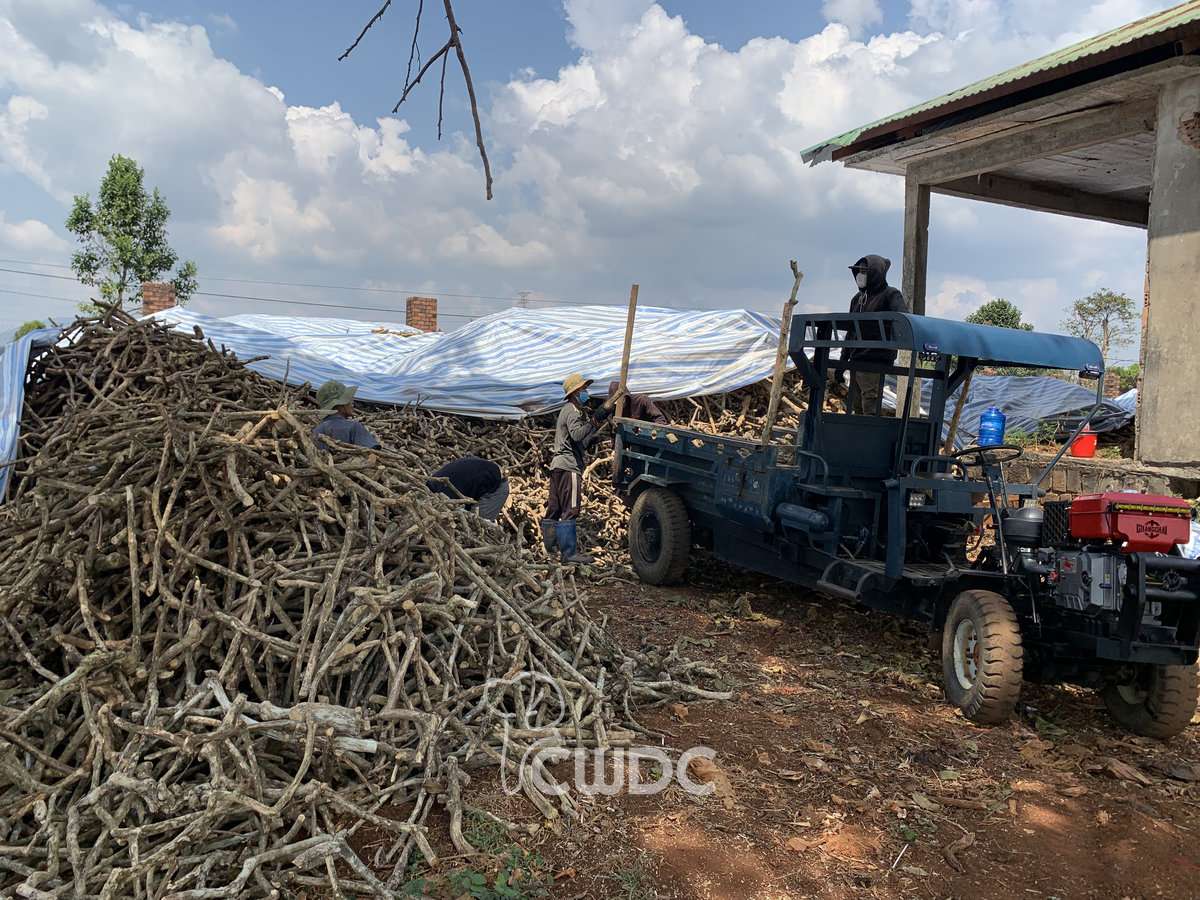
Farmers bring harvested branches to a nearby collection point rather than requiring our team to visit every individual farm directly. This keeps the transport network efficient across a wide growing region.
Additionally, our team works with the same collection points repeatedly, which builds a consistent working relationship rather than sourcing from an unpredictable, rotating set of middlemen.
As a result, wood arriving from a familiar collection point tends to follow more predictable timing and condition than an ad hoc pickup would.
Why Covered Collection Points Matter Before the Trip to Our Factory
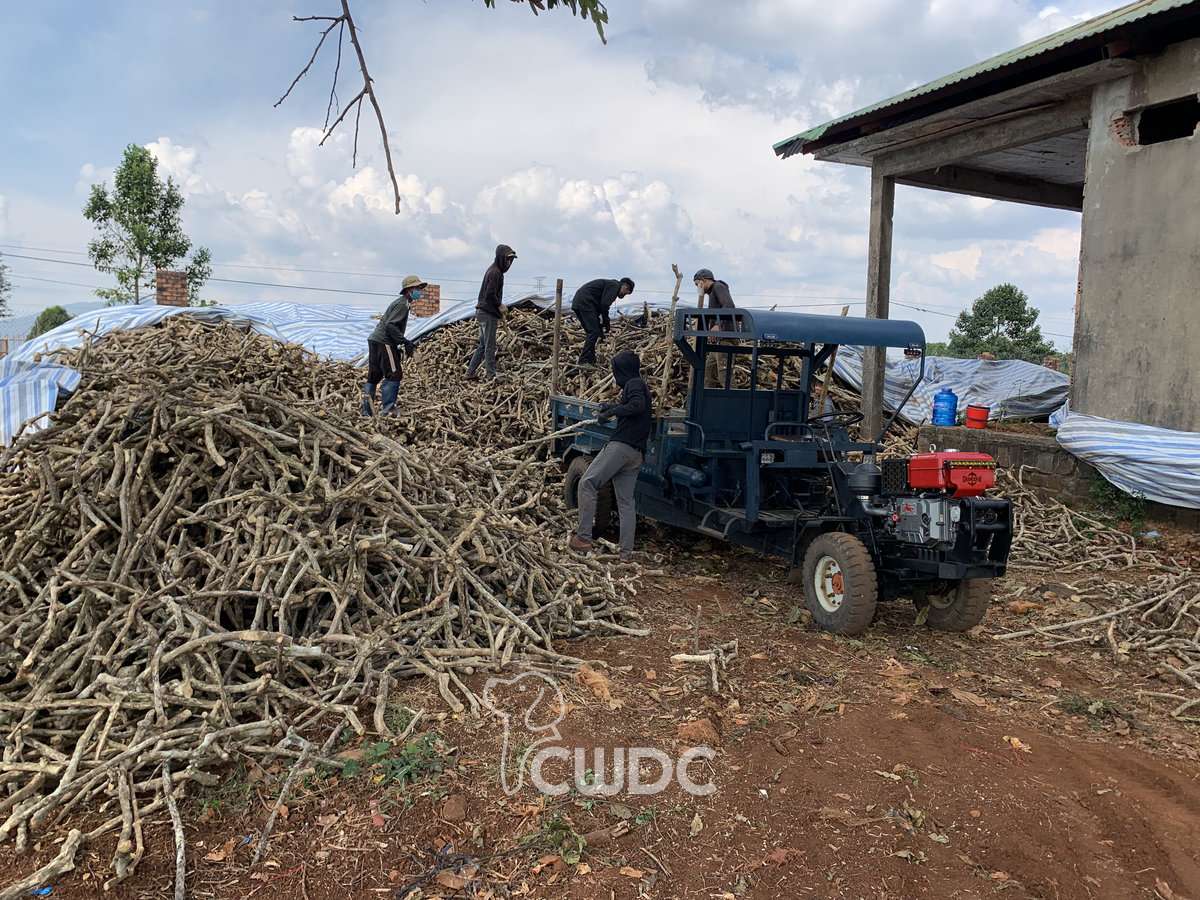
Raw wood waiting at a collection point still needs protection from rain before it ever reaches our warehouse. Exposed piles absorb moisture that later slows drying and increases mold risk.
Furthermore, our transport vehicles load branches directly from covered or tarped piles, limiting how long wood sits exposed to weather during the transfer itself.
Consequently, wood that reaches our facility has already avoided the most common source of pre-drying moisture damage: prolonged rain exposure at a collection point.
What Happens When Transport Logistics Are Inconsistent
A supplier without a reliable collection and transport network faces unpredictable raw material timing. Some weeks bring more wood than production can use, and other weeks bring far too little.
This inconsistency eventually reaches the importer as production delays, since a factory cannot dry and shape wood it has not yet received.
On the other hand, a supplier with an established transport network keeps raw material flowing predictably, regardless of which specific farms are harvesting that week.
Questions to Ask About a Supplier’s Transport Process
First, ask whether the supplier works with established collection points or relies on ad hoc pickups from unfamiliar sources each time.
Second, ask how raw wood is protected from rain between harvest and arrival at the factory. This affects moisture levels before drying even starts.
Finally, ask how transport timing affects production scheduling. A supplier who can answer this clearly likely manages this link in the supply chain deliberately, not incidentally.
Sourcing Coffee Wood Dog Chews From CWDC Vietnam
CWDC Vietnam manages raw material transport from collection points through to final production, keeping the full supply chain under consistent oversight. This reduces the moisture and timing risks that an unmanaged transport network would introduce.
For importers evaluating this category, explore our Coffee Wood Dog Chew range to review current specifications, learn about our OEM and ODM solutions, and contact our team with questions about supply timelines.


