


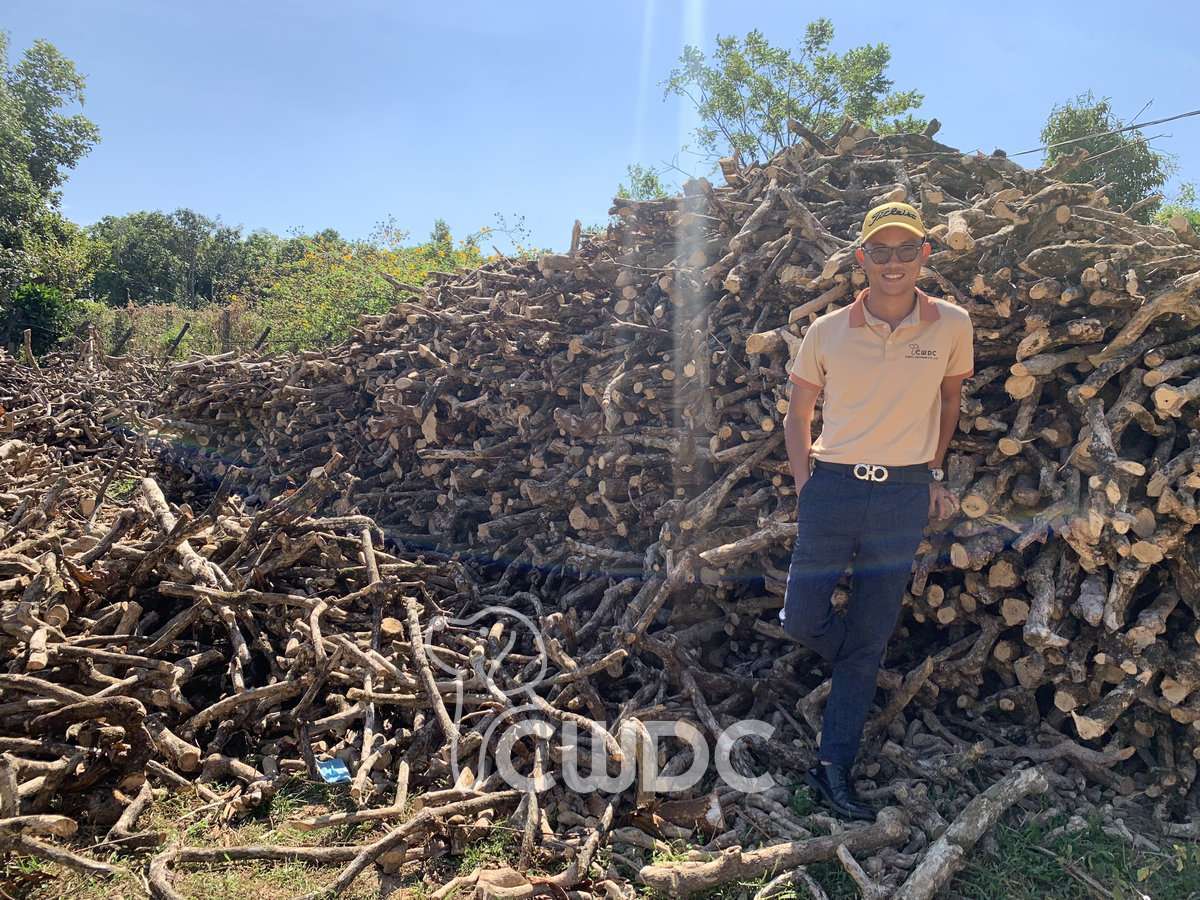
Every Coffee Wood Dog Chew from CWDC Vietnam begins with a decision made on a coffee farm in Vietnam’s Central Highlands. When a coffee tree finishes its productive lifecycle after two or three decades of fruit production, the farming family that has tended it must decide what to do with the wood. The traditional answer in most growing regions is to burn it in the field or let it decompose on site. CWDC Vietnam offers a different path, one that converts what was agricultural waste into a premium natural pet product sold to wholesale buyers across multiple international markets.
Understanding this path, from the coffee farm in the highlands of Vietnam to the chew toy in a dog’s mouth, requires understanding both the material and the production model that gives it value.
The Coffee Tree Lifecycle and Why the Wood Matters
Coffea canephora, the species most widely grown in Vietnam’s Central Highlands, produces coffee fruit reliably for approximately 20 to 30 years under good cultivation conditions. During this period, the tree trunk and branches develop steadily, accumulating dense, hard wood as the tree matures. The same years that build the tree’s coffee-producing capacity also build the structural density of its wood.
By the time a coffee tree reaches the end of its productive fruit-bearing lifecycle, its wood has properties that make it genuinely valuable for applications requiring hardness, density, and natural fibrous structure. Coffee wood is harder than most plantation-grown softwoods used in furniture and construction. It resists splintering in the way that natural fibrous hardwoods do, breaking down into fibers under pressure rather than fracturing into sharp pieces. These properties, which develop only over the full growth cycle of the tree, are what make old coffee wood suitable for dog chews.
Young coffee wood, sourced from trees pruned before maturity, does not have the same density. The repurposing model only works because the wood is taken at the end of the tree’s full productive lifecycle, after it has had the time to develop the material properties that make it useful.
Vietnam’s Central Highlands: The Source
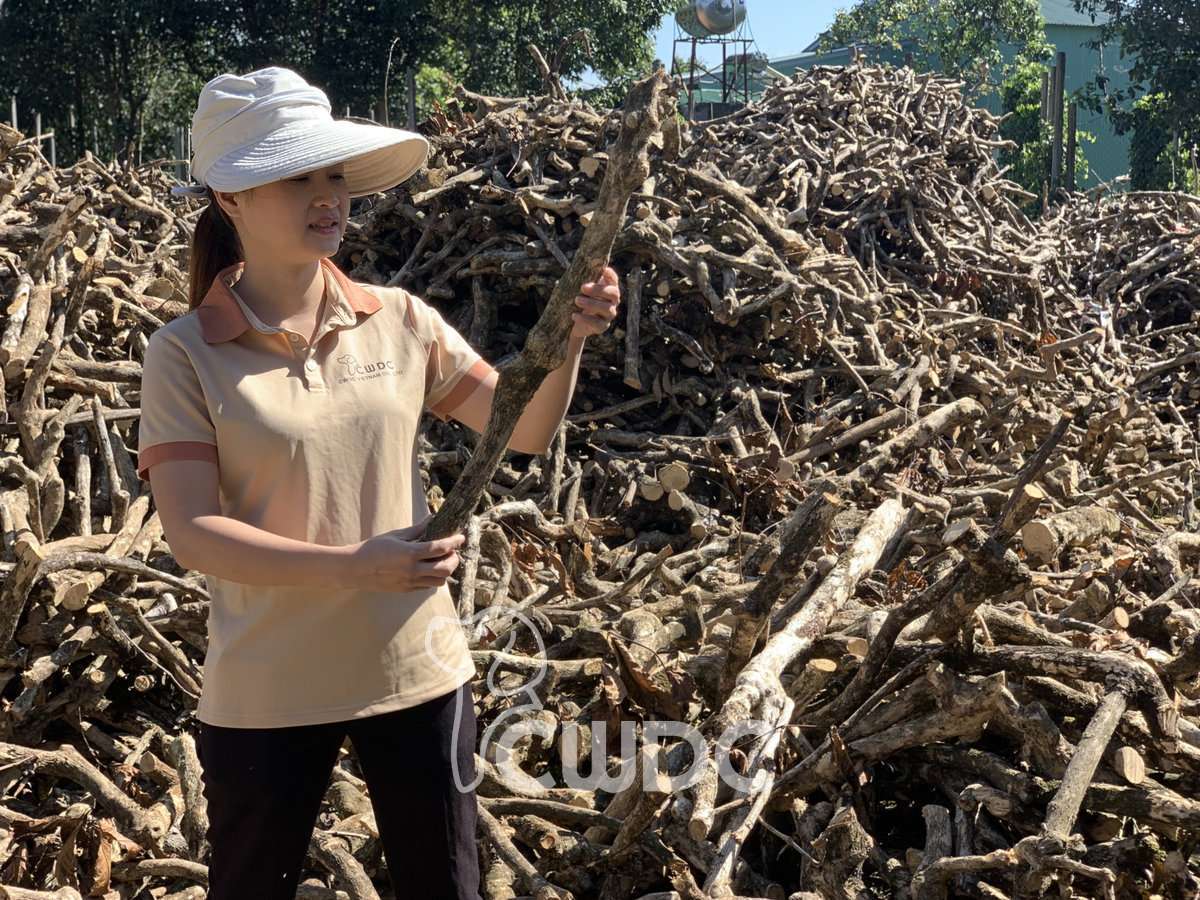
Vietnam’s Central Highlands encompass some of the country’s most productive coffee-growing provinces, sitting at elevations between 600 and 800 meters above sea level, with red basalt soils and a climate characterized by a clear dry season and reliable wet season. These conditions produce coffee with the flavor profiles and growing characteristics that Vietnamese robusta growers have developed over decades.
The coffee farms that supply CWDC Vietnam with wood are operated by families who have grown coffee in the Central Highlands for generations. Some are smallholders with a few hectares; others operate at larger scale. What they share is the annual cycle of replanting: when old trees are removed to make way for new planting, or when trees die or cease producing, the wood has historically had no commercial value at the farm level.
CWDC Vietnam’s sourcing model changes this. By purchasing the wood from coffee farming families at the point of tree removal, CWDC Vietnam creates an income stream from a resource that was previously a disposal problem. The farming family receives value from the wood. CWDC Vietnam receives raw material. No additional land is cleared, no new trees are cut, and no virgin timber enters the supply chain.
Production in the Central Highlands
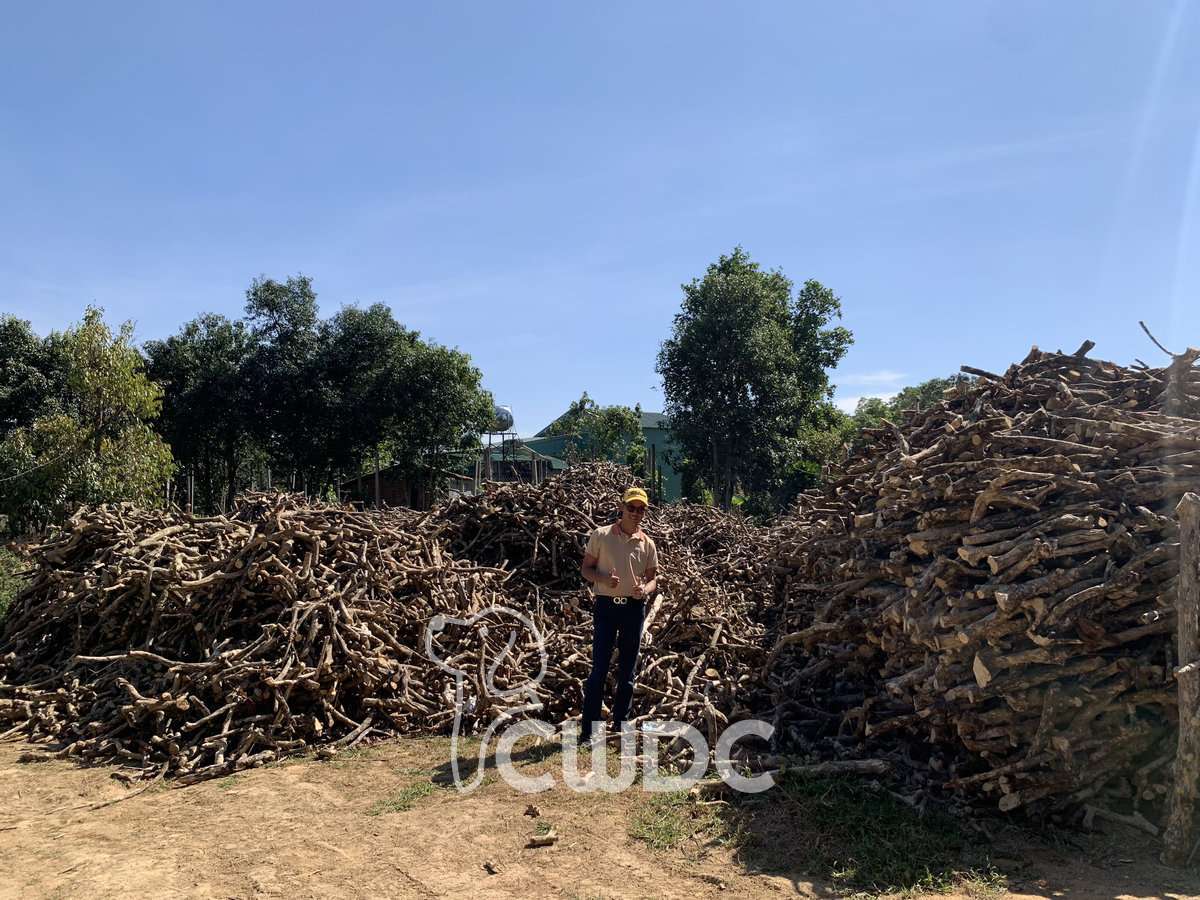
CWDC Vietnam processes coffee wood at its production facility in the Central Highlands. The wood is cut, shaped, and dried using natural methods. No chemical treatments are applied at any stage of production. No sealants, stains, preservatives, or adhesives are used. The product that leaves the production facility is natural wood that has been mechanically shaped and carefully dried — small pieces are air-dried under shelter, while larger chews are kiln dried for thorough and consistent moisture removal.
Each chew is shaped by hand and inspected before packaging. Because the source material is natural wood from actual trees rather than manufactured material, each piece has its own character: slight variations in color, grain, density, and surface texture that reflect the individual tree it came from. This variation is intrinsic to the product and is part of what distinguishes a natural product from a manufactured one.
The production process employs workers from local communities in the Central Highlands. The combination of raw material sourcing from local farming families and production employment in the local community means that CWDC Vietnam’s operations generate economic value in the same region where the agricultural raw material originates.
The Supply Chain Story in One Product
The journey of a CWDC Vietnam coffee wood dog chew can be traced precisely. A coffee tree grows in Vietnam’s Central Highlands for 25 years, producing coffee for the global beverage market throughout that period. When the tree is removed at the end of its productive life, CWDC Vietnam sources the wood and processes it at a facility in the same region. The finished product passes independent testing and receives the export documentation required for international trade, including Phytosanitary Certificates and Certificates of Origin from Vietnam.
The chew then travels to retailers across multiple international markets. A dog owner purchases it, and their dog chews on the same wood that spent decades growing on a hillside in Vietnam’s Central Highlands, producing the coffee in some of the beverages the same owner may have consumed.
This supply chain involves no virgin timber, no chemical treatment, no synthetic inputs, and no land clearing. It generates income at the farm level, employment at the production level, and a documented, traceable product for the international market.
Experience the difference of Vietnam’s finest coffee wood. Shop our Coffee Wood Dog Chew collection, contact us for wholesale inquiries, and discover our OEM/ODM customization options.


