


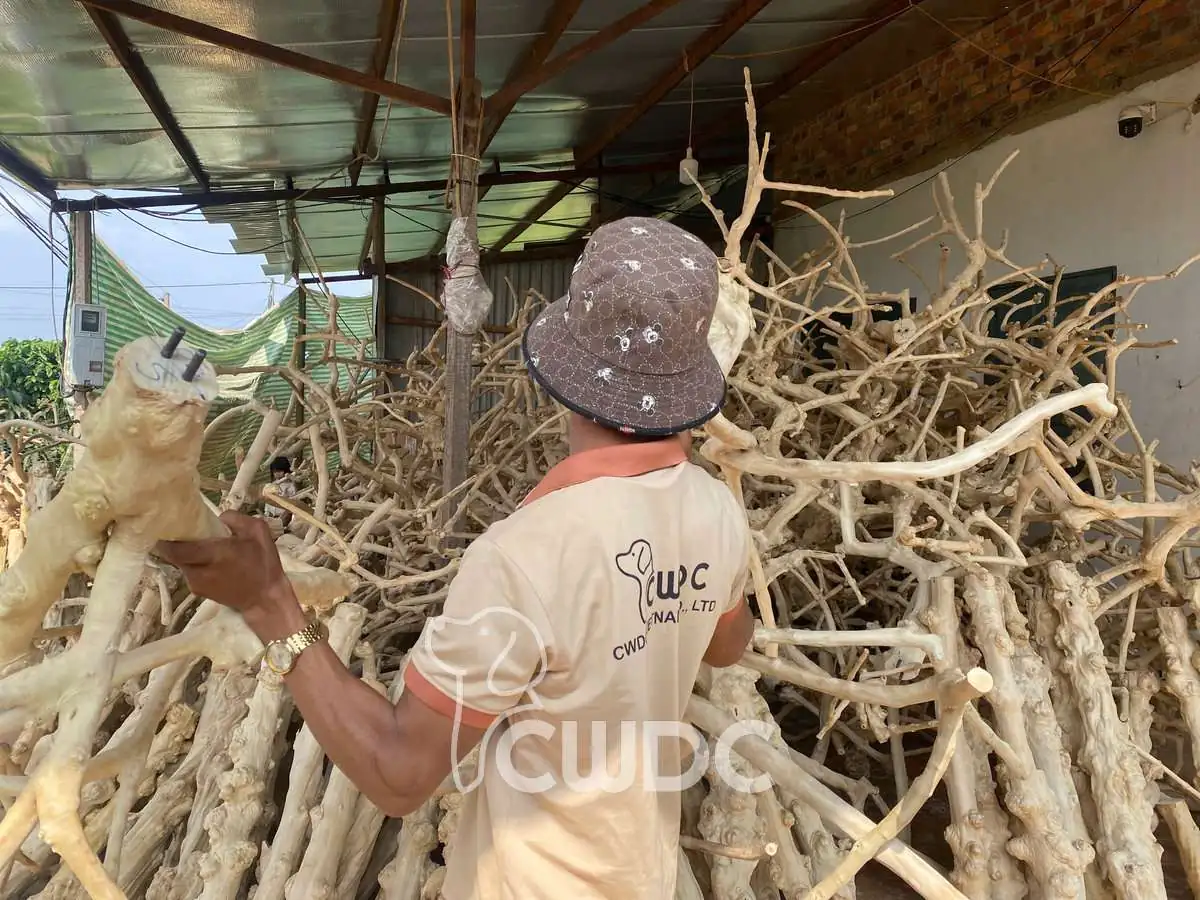
A parrot’s feet are among the most complex and functionally critical parts of its anatomy. Unlike most pet animals, parrots are zygodactyl, meaning two toes point forward and two point backward, giving them a precision grip that evolved specifically for navigating branches of varying diameter, texture, and flexibility. When a captive parrot spends most of its day on a single uniform perch surface, it fails to use the full range of its foot musculature, and the consequences accumulate over time in the form of pressure sores, muscle atrophy, and compromised grip strength.
Java wood bird playstands from CWDC Vietnam address this problem at its root by offering the same surface variation a parrot would encounter in its natural forest environment. The irregular diameter, natural texture, and organic branch geometry of java wood perches engage the foot continuously rather than holding it in a fixed, static position.
The Anatomy of Parrot Foot Health
Parrot feet are subject to three main categories of health problems in captivity: pressure necrosis (bumblefoot), muscle atrophy from restricted movement, and nail overgrowth that alters posture and grip mechanics. All three conditions are significantly influenced by perch design.
Bumblefoot develops when a bird stands on a perch surface that applies sustained pressure to the same area of the foot pad. Uniform-diameter dowel rods are among the most common causes of this condition because they force the foot into exactly the same position every time the bird lands. The skin over the pressure points degrades, becomes inflamed, and can develop into serious lesions requiring veterinary treatment.
Muscle atrophy occurs when the foot is not required to constantly adjust its grip. On a natural branch, variations in diameter, angle, and surface irregularity force constant micro-adjustments from the tendons and muscles of the foot and lower leg. These adjustments maintain muscle tone, circulation, and the neuromuscular coordination that supports healthy grip. A uniform perch eliminates this stimulus and allows the muscles to weaken over time.
Nail overgrowth is accelerated by perch surfaces that do not provide natural abrasion. In the wild, contact with rough bark surfaces wears nails down to an appropriate length as part of normal daily activity. When nails grow too long in captivity, they alter the way the bird distributes weight across its foot, creating new pressure points and potentially catching on cage materials or the bird’s own feathers.
Why Java Wood Solves These Problems

Java wood is harvested from coffee trees, specifically the woody branch and trunk material of Coffea canephora plants grown in Vietnam’s Central Highlands. These trees produce coffee fruit for approximately 20 to 30 years before their yield declines. At that point, rather than being burned or discarded as agricultural waste, they are repurposed by CWDC Vietnam into pet products, including bird playstands and perches.
The natural structure of coffee tree wood is what makes it medically and behaviorally superior to manufactured perch alternatives. Coffee tree branches grow with natural curves, irregular diameters, and surface texture defined by the genuine bark of a working tree. When a parrot stands on a java wood perch, its foot must continuously adapt its grip as the bird shifts position. The varying diameter means the foot engages different muscle groups depending on where the bird grips. The textured surface provides the abrasion that regulates nail length over time.
CWDC Vietnam’s java wood bird playstands are handcrafted rather than manufactured to uniform specifications. This means each piece retains the natural variation of its source material. No two playstands are identical, and the perch surfaces within a single playstand offer different grip experiences at different heights and angles.
Material Safety and Chemical Composition

Bird owners are rightfully cautious about the materials their pets contact. Parrots are susceptible to respiratory problems from chemical fumes, and many wood preservatives, paints, and surface treatments are acutely toxic to birds. Java wood playstands from CWDC Vietnam are produced without chemical treatments of any kind. The wood is dried and shaped using natural processes; no sealants, stains, adhesives, or preservatives are applied at any stage of production.
The wood itself does not contain caffeine in biologically significant quantities. Caffeine is present in the seeds and leaves of the coffee plant, not in the branch and trunk wood. The perch material your bird contacts is simply dried natural wood with its bark intact.
Playstand Design and Behavioral Enrichment
CWDC Vietnam’s java wood bird playstands are designed as freestanding structures that sit outside the cage, providing birds with an out-of-cage activity area that enriches their daily routine. Parrots require time outside their cages for physical and psychological health; playstands give them a defined and structured space for this time.
The branching architecture of a java wood playstand creates multiple perch positions at varying heights and angles, which encourages birds to move, climb, and shift position regularly rather than remaining in one spot. This movement supports cardiovascular health and maintains the range of motion in the feet, legs, and wings that uniform perch systems do not.
The natural irregular surface of java wood also supports beak conditioning. Parrots chew on perch surfaces as part of normal behavior, and the genuine wood grain of java wood provides appropriate resistance and material for this activity. The wood breaks down slowly under chewing, which is normal and expected; it does not splinter into sharp shards but rather frays in a way that matches natural branch material.
Sourcing, Production, and Export
CWDC Vietnam is based in Vietnam’s Central Highlands, one of the country’s primary coffee-growing regions. The company works directly with local farming families to source coffee trees at the end of their productive lifespan, converting agricultural byproduct into export-quality pet products. This sourcing model supports rural agricultural income while eliminating the need to cut virgin timber for pet product manufacturing.
Each java wood playstand is hand-assembled and inspected before shipping. Export documentation including Phytosanitary Certificates and Certificates of Origin accompanies each shipment. CWDC Vietnam exports to wholesale buyers across multiple international markets.
Invest in your bird’s foot health today. Explore our Java Wood Bird Playstand, read about Our Philosophy, and see our product gallery.


