


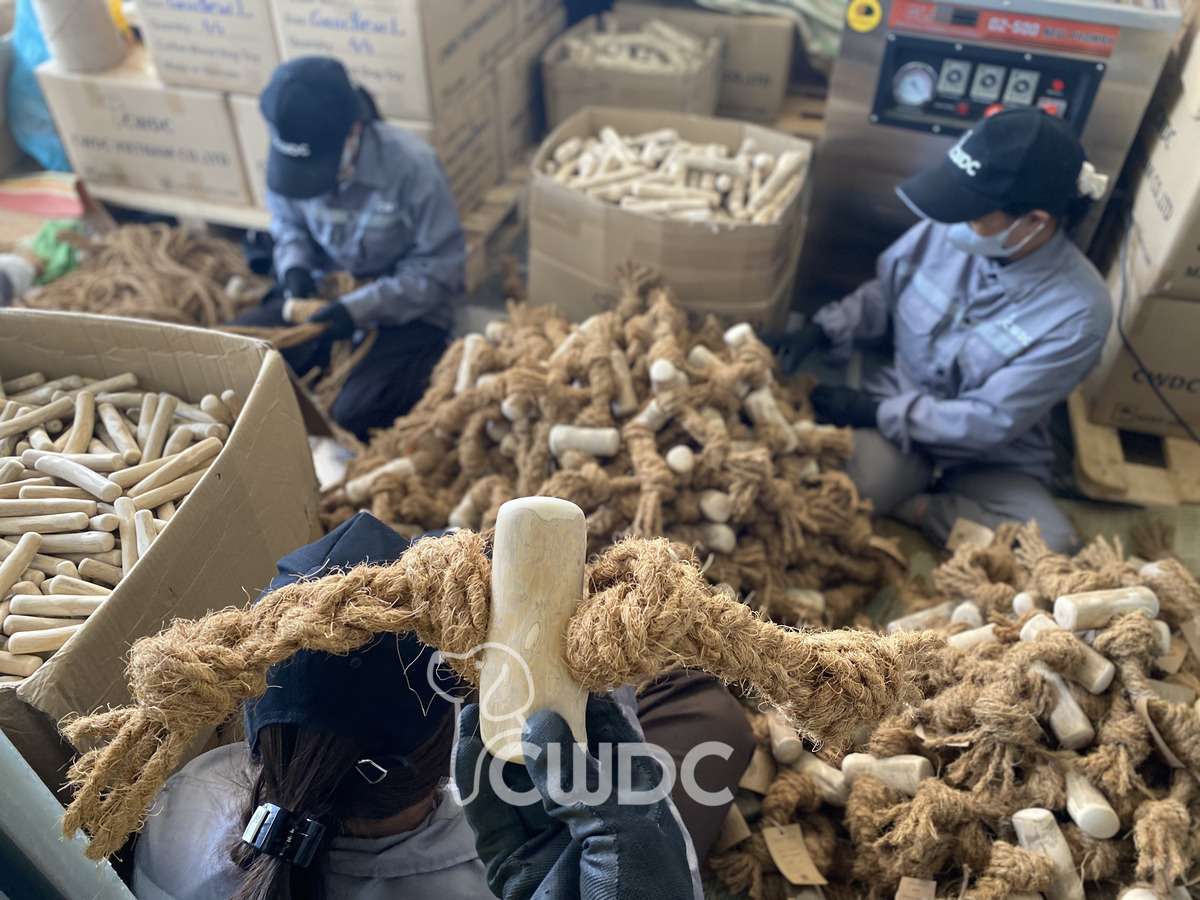
Not every dog chews without consequences. For some dogs, the material in a toy matters as much as the toy itself.
Synthetic fibers in rope toys, rubber compounds in chew toys, and dyes in fabric toys can all trigger reactions in dogs with skin sensitivities or allergies. Owners of sensitive dogs know this well: they have watched their dog scratch and lick after playing with a toy that seemed perfectly normal, and they have been through the frustrating process of elimination trying to figure out which material was the problem.
Coconut coir is a natural alternative that sidesteps most of these concerns, and it is gaining serious traction in the natural pet product market for good reason.
What Coconut Coir Is
Coconut coir is the fibrous material extracted from the outer husk of the coconut, the layer between the hard shell and the outer green or brown surface. It is a natural byproduct of coconut processing that would otherwise be discarded. Converting it into dog toy rope, ball, and bone materials is a genuine zero-waste application of agricultural waste.
The fiber itself has properties that make it well-suited for dog toys. It is naturally tough and resistant to fraying under sustained chewing, which gives coir-based toys longer life than cotton rope equivalents. The fiber is also naturally low-allergen, making it a safer option for dogs whose owners want to minimize exposure to synthetic materials.
Why Sensitive Skin Dogs Respond Differently to Natural Fibers
The immune and skin reactions that cause some dogs to scratch and lick after contact with toys are most commonly triggered by:
Chemical dyes and colorants applied to synthetic fibers. Even “pet-safe” color claims are rarely validated by independent testing, and the dyes used in brightly colored rope toys represent a significant potential irritant.
Synthetic polymer compounds in rubber and nylon toys. These materials can off-gas at room temperature, and while the concentrations involved are generally low, dogs spend extended time in contact with their toys and often ingest small amounts through chewing.
Processing residues in cotton rope toys. Standard cotton is typically treated with pesticides during farming and processing chemicals during manufacture. Unless the cotton is certified organic, the fiber may carry residue that accumulates with repeated exposure.
Coconut coir avoids all three of these categories. The fiber is undyed, unprocessed beyond extraction and cleaning, and derived from a plant that does not require the heavy pesticide treatment that conventional cotton does.

The Toy Formats That Work Best With Coir
Coconut coir is naturally suited to several dog toy formats, each with distinct engagement patterns.
Coir rope toys provide the familiar tug-and-pull engagement that dogs find satisfying, but with the added benefit of the rough fiber texture creating a passive dental cleaning effect as the dog works the rope in their mouth. The natural texture is also more interesting to most dogs than smooth synthetic rope.
Coir ball toys offer fetch and chew engagement in one product. The natural resilience of coir fiber means the ball compresses under bite pressure and recovers its shape, which holds a dog’s interest through play sessions in a way that a non-compressible rubber ball does not.
Coir bone shapes provide a recognizable form that most dogs orient to immediately, while the natural material provides tactile satisfaction during the chewing phase of interaction.
All three formats benefit from coir’s natural durability. The fiber does not unravel rapidly or leave large fabric shreds the way cotton rope can, which reduces the ingestion risk that comes with rope toys that are allowed to deteriorate.
For Dogs With Known Sensitivities
If your dog has been diagnosed with environmental allergies, contact dermatitis, or atopic dermatitis, a transition to natural-material toys is a reasonable step alongside the primary treatment protocol. It will not resolve an underlying allergy, but it removes a variable that may be contributing to the irritant load your dog’s immune system is managing.
The practical approach for owners is to rotate the dog’s toy inventory systematically, replacing one synthetic item at a time with a natural alternative and observing whether the frequency or intensity of scratching and licking changes. Coconut coir is a logical starting point for rope and ball toys because the material transition is significant while the play behavior change is minimal.
What CWDC Vietnam Produces
CWDC Vietnam manufactures coconut coir dog toys using natural coconut husk fiber sourced from Vietnam. Products are available in rope, ball, and bone formats in multiple sizes suitable for small breeds through large dogs.
The same natural-material philosophy that guides CWDC’s coffee wood production applies to the coir line: no chemical treatments, no synthetic dyes, no materials that cannot be accounted for through the supply chain.
For wholesale buyers, the coconut coir range pairs naturally with the coffee wood chew line as a complementary natural pet product offering. Both categories serve the same buyer segment: owners who are extending their natural-material values to their pets and are willing to pay a modest premium for products that align with those values.
Explore the full Coffee Wood Coconut Coir Dog Toy range and find the format that best suits your dog’s play style. Have questions about material safety, sizing, or care? Visit our FAQs page for detailed answers on safety, sizing, and what to expect from natural pet products. Sample requests and wholesale pricing are available through our wholesale and OEM/ODM program.


