


Rawhide has been sold as a dog chew staple for over 50 years. It is familiar, widely available, and affordable. It also has a documented list of concerns that have been accumulating in veterinary literature and pet owner communities for the better part of two decades. At the same time, coffee wood (a genuinely natural chew alternative made from the wood of coffee trees) has been gaining significant traction internationally.
This is not a brand comparison. It is a material comparison. What is rawhide actually made from? What does coffee wood actually offer? And what do the differences mean for your dog?
What Rawhide Actually Is
Rawhide is the inner layer of animal hide, most commonly cattle or horse. The production process is more industrial than the word “natural” on many rawhide packages would suggest. Raw hides are treated with a lime solution to remove hair and fat, then washed with water and potentially additional chemicals to clean and preserve the material. The resulting hide is cut, shaped, pressed, and often bleached to achieve a uniform white or cream color. Some manufacturers apply artificial flavoring or coloring before packaging.
The finished product is an industrially processed hide, not a raw or minimally processed food. The chemical residues from the production process (lime, hydrogen peroxide, bleaching agents, and in some supply chains, arsenic and formaldehyde) are a consistent concern in third-party safety analyses of rawhide products, particularly those produced outside tightly regulated markets.
The Three Core Problems with Rawhide

Choking and obstruction risk: Rawhide softens as your dog chews it. This is actually the primary risk mechanism. As the hide softens, dogs are able to bite off large pieces that have not been meaningfully reduced, they have simply become soft enough to detach. These large, gummy pieces are difficult to pass and can cause choking or gastrointestinal obstruction. The risk is particularly high for aggressive chewers who work through rawhide quickly and for dogs that are unsupervised during chewing sessions.
Digestibility concerns: Rawhide is not effectively digested by most dogs. The collagen structure of processed hide does not break down in the way that actual food does. When rawhide pieces reach the stomach, they can remain there for extended periods, expanding as they absorb fluid. Partial digestion in the intestines can create a dense, difficult-to-pass mass. Veterinary emergency cases involving rawhide obstruction are well documented.
Chemical content: The processing chemicals used in rawhide production (particularly in products sourced from countries with less regulated production environments) are a legitimate concern. Hydrogen peroxide bleaching, artificial dyes and flavorings, and in some documented cases, heavy metal contamination, represent chemical exposures that have no place in a product your dog chews extensively.
What Coffee Wood Offers Instead
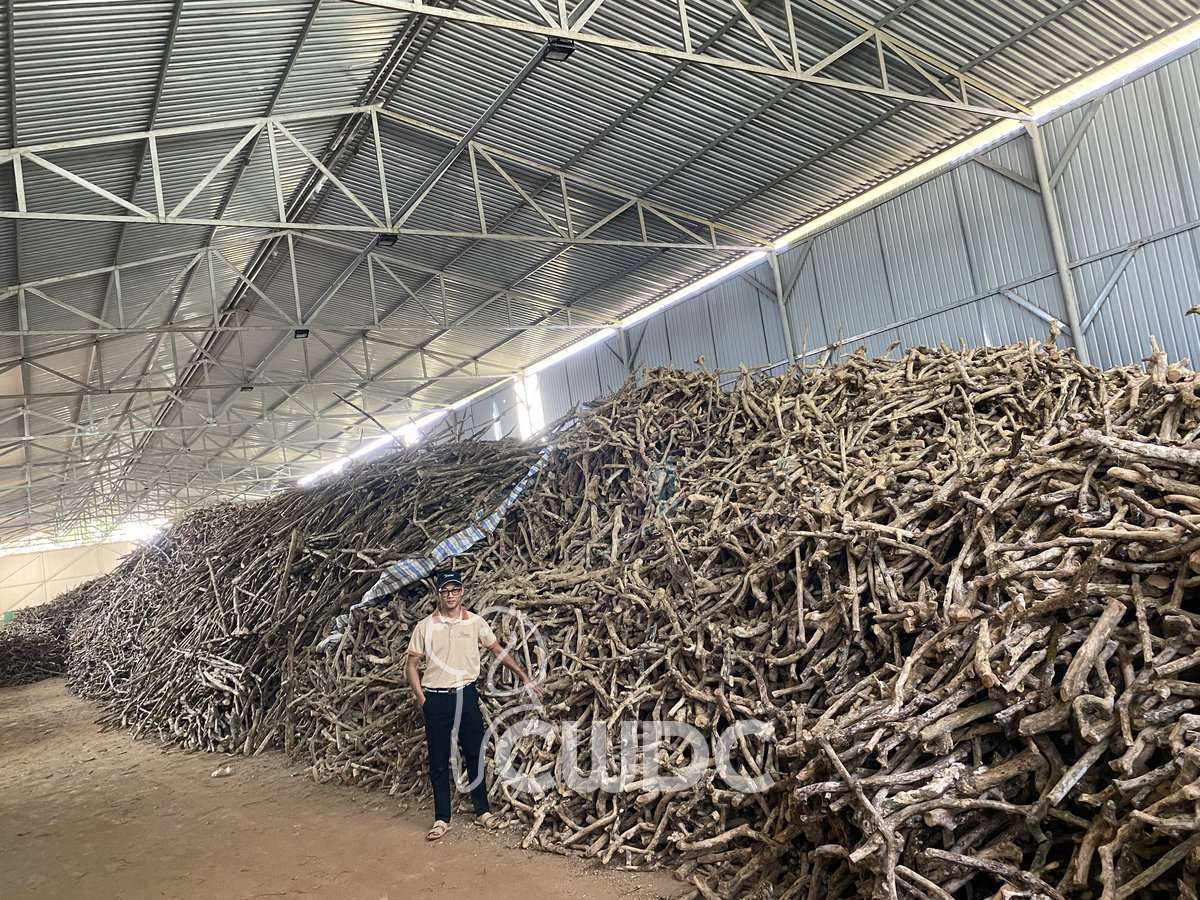
Coffee wood chews from CWDC Vietnam are exactly what the name suggests: pieces of wood from coffee trees, specifically Robusta trees grown in Vietnam’s Central Highlands. The trees are aged 20+ years. When they are harvested or naturally replaced, the wood is cut into chew-appropriate pieces, sanded smooth, and air-dried.
That is the entire production process. There is no chemical treatment at any stage. No bleaching. No flavoring. No preservatives. No dyes.

The safety profile of coffee wood is fundamentally different from rawhide because of how wood behaves under chewing. Coffee wood does not soften the way rawhide does. It splinters into very small fibers, not large, gummy chunks. These fibers are small enough to pass safely through the digestive system in virtually all cases. The structural characteristics of the wood itself prevent the kind of large-piece detachment that makes rawhide a choking risk.
The natural aroma of coffee wood (a mild, pleasant coffee scent from the residual oils in the wood) provides immediate engagement for most dogs without any artificial flavoring required. Dogs that show no interest in unflavored wood chews will almost universally engage with coffee wood immediately.
The Dental Comparison
Rawhide is frequently marketed as a dental health product. The claim is not entirely without basis, the mechanical action of chewing does reduce plaque accumulation on tooth surfaces. But the same mechanical claim applies to any sufficiently hard chew, including coffee wood.
Coffee wood provides a firm chewing surface that creates meaningful mechanical abrasion against tooth surfaces throughout the session. Because coffee wood does not become soft and gummy under chewing, it maintains consistent hardness and surface texture for the entire chewing session. Rawhide begins to lose its surface hardness quickly as it softens, reducing the dental cleaning effect even as the obstruction risk increases.
For dogs that need extended dental engagement (heavy chewers, dogs prone to tartar buildup, dogs that simply need long chew sessions for behavioral satisfaction) coffee wood sustains the mechanical cleaning effect for longer.
Sourcing and Supply Chain Transparency
Rawhide’s supply chain is notoriously difficult to trace. The global hide market involves cattle hides from multiple countries, processed and re-processed through multiple stages, with limited traceability at the retail level. A rawhide product packaged in one country may contain hides processed in several others.
CWDC Vietnam’s coffee wood supply chain is direct and transparent. The wood comes from Robusta coffee farms in Vietnam’s Central Highlands, a specific, verifiable geographic origin. CWDC processes the wood at its own facilities and exports directly to retail and wholesale customers worldwide. Full documentation for customs, import compliance, and ingredient verification is available for all products.
Making the Switch
For dogs transitioning from rawhide to coffee wood, the transition is typically straightforward. The natural coffee scent engages most dogs without any introduction period. For dogs with strong rawhide conditioning, rubbing a small amount of natural food (peanut butter, chicken broth) onto the wood surface in the first session often bridges the gap.
Sizing is important. Coffee wood chews should be sized so that the piece is too large for your dog to fit entirely in its mouth. This is the same sizing principle that applies to all hard chews. CWDC Vietnam offers sizing guidelines based on dog weight and chewing intensity.
Ready to make the switch from rawhide? Shop our Coffee Wood Dog Chew, explore Retail Partnership opportunities, and see our FAQ section.


