


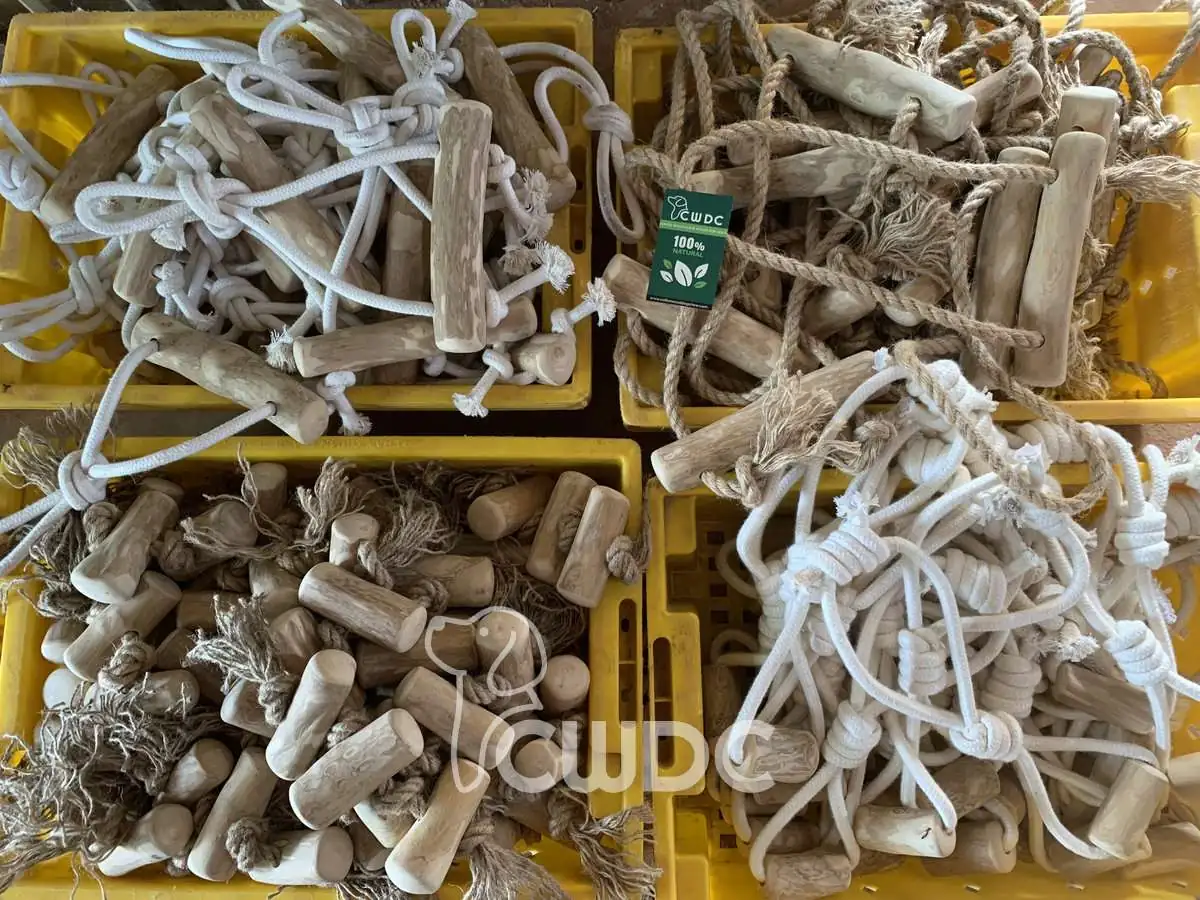
Dogs engage with toys longer when those toys present more than one sensory and physical challenge. This is not simply anecdotal observation; it reflects the way dogs process environmental stimulation and how boredom develops during play. A toy that offers only one texture, one resistance level, and one way of interacting will be explored, understood, and set aside faster than one that requires different physical approaches and delivers different tactile feedback depending on how the dog interacts with it.
The Coffee Wood Cotton Rope Dog Toy from CWDC Vietnam combines two materials with fundamentally different physical properties into a single product. Understanding why this combination produces longer engagement requires looking at both materials and at the behavioral science of canine play.
What Dogs Seek in a Toy
Dog play behavior is rooted in the behavioral sequences associated with hunting: orienting, stalking, chasing, grabbing, biting, and dissecting. Different dogs show different strengths in these behavioral components depending on breed and individual temperament, but most pet dogs engage with toys that activate some portion of this sequence.
Toys that activate the biting and dissecting components of this sequence tend to produce the longest engagement in most adult dogs. The biting component involves applying jaw force to a resistant material; the dissecting component involves working through, separating, or modifying the toy through repeated action. Both components require physical effort and deliver sensory feedback through the dog’s highly sensitive mouth and jaw proprioception system.
A toy that quickly yields under biting force, is consumed, or cannot be modified by the dog’s action fails to sustain these behaviors. A toy that never yields at all and offers the same resistance throughout is also less engaging over time, because the dog receives no reinforcing feedback from its actions. The most engaging toys present sustained resistance that yields gradually and variably, rewarding persistence without being quickly finished.
Coffee Wood: The Chew Component

Coffee wood provides the chew component of the dual-texture toy. The wood is sourced from mature coffee trees in Vietnam’s Central Highlands, trees that have completed their productive fruit-bearing lifecycle after 20 to 30 years. The branch material of these trees produces a dense, fibrous wood that is hard enough to provide significant resistance under chewing force but structured in a way that produces fibers rather than sharp fragments when worked.
The fibrous nature of coffee wood is important to the engagement dynamic. As a dog chews on the wood section of the toy, the surface gradually changes: fibers separate, the texture evolves, and the dog encounters slightly different tactile input as the session continues. This variation keeps the chewing behavior reinforcing because the dog is receiving continuously changing sensory feedback rather than identical input on every bite.
Coffee wood also has a natural scent that dogs find compelling. The mild woody aroma of freshly dried coffee wood activates olfactory interest and encourages initial investigation and sustained engagement. Dogs rely on scent as a primary information channel, and a material with genuine natural scent complexity maintains interest in a way that scentless synthetic materials cannot.
Cotton Rope: The Tug and Chew Component

The cotton rope component of the toy offers completely different physical properties. Where coffee wood is rigid and dense, cotton rope is flexible, compressible, and yielding. A dog interacting with the rope portion of the toy can chew it, pull it, shake it, and grip it in ways that are impossible with the wood. This expands the behavioral repertoire available to the dog during a single play session.
Cotton rope is particularly suited to the grabbing and shaking behaviors in the canine play sequence. When a dog grips the rope and shakes or tugs, it is activating the behavioral components associated with prey handling. These behaviors are inherently self-reinforcing, which is why tugging games are among the most engaging activities for most dogs.
Natural cotton is the appropriate material choice for a rope dog toy component. Synthetic rope fibers, when ingested during chewing, do not break down in the digestive system and can accumulate in ways that cause gastrointestinal problems. Natural cotton fibers, by contrast, are digestible and pass through the system without accumulating. Dogs inevitably ingest some rope fiber during chewing; using natural cotton ensures this is not a health risk.
The Dual-Texture Engagement Advantage
The combination of coffee wood and cotton rope within a single toy creates an engagement dynamic that neither material produces alone. When a dog engages with the toy, it has two fundamentally different interactive surfaces available at any moment. It can shift from chewing the wood to tugging the rope to chewing the rope to holding the wood and shaking the rope end, and each of these interactions delivers different sensory input and activates different components of the play behavioral sequence.
This variety is what produces the longer engagement times that owners consistently report with combination toys compared to single-material alternatives. The dog does not habituate as quickly because the toy is not offering the same experience throughout. Each shift in how the dog interacts with the toy resets the novelty of that interaction.
There is also a social play dimension. The rope component of the toy makes it suitable for interactive tug games between dog and owner, which adds a third engagement mode beyond solo chewing. The coffee wood provides anchor weight and grip resistance during tug play, making the toy perform better in this context than a rope toy without the wood element.
Material Safety
CWDC Vietnam’s Coffee Wood Cotton Rope Dog Toy is produced without chemical treatments on either component. The coffee wood is carefully dried and shaped; no preservatives, stains, or coatings are applied. The cotton rope is natural unbleached cotton without synthetic dye or chemical finishing.
The coffee wood component does not contain caffeine in biologically relevant quantities. Caffeine is concentrated in the seeds and leaves of the coffee plant, not in the branch wood from which these toys are produced.
Production and Sourcing
CWDC Vietnam sources coffee wood from farming families in Vietnam’s Central Highlands, one of the country’s primary coffee-growing regions. Trees at the end of their fruit production lifecycle are repurposed into pet products, converting agricultural byproduct into export-quality toys without requiring virgin timber extraction.
Give your dog two engagement modes in one toy. Shop the Coffee Wood Cotton Rope Dog Toy, read about Our Commitments, and find out why dog owners trust CWDC Vietnam.


