


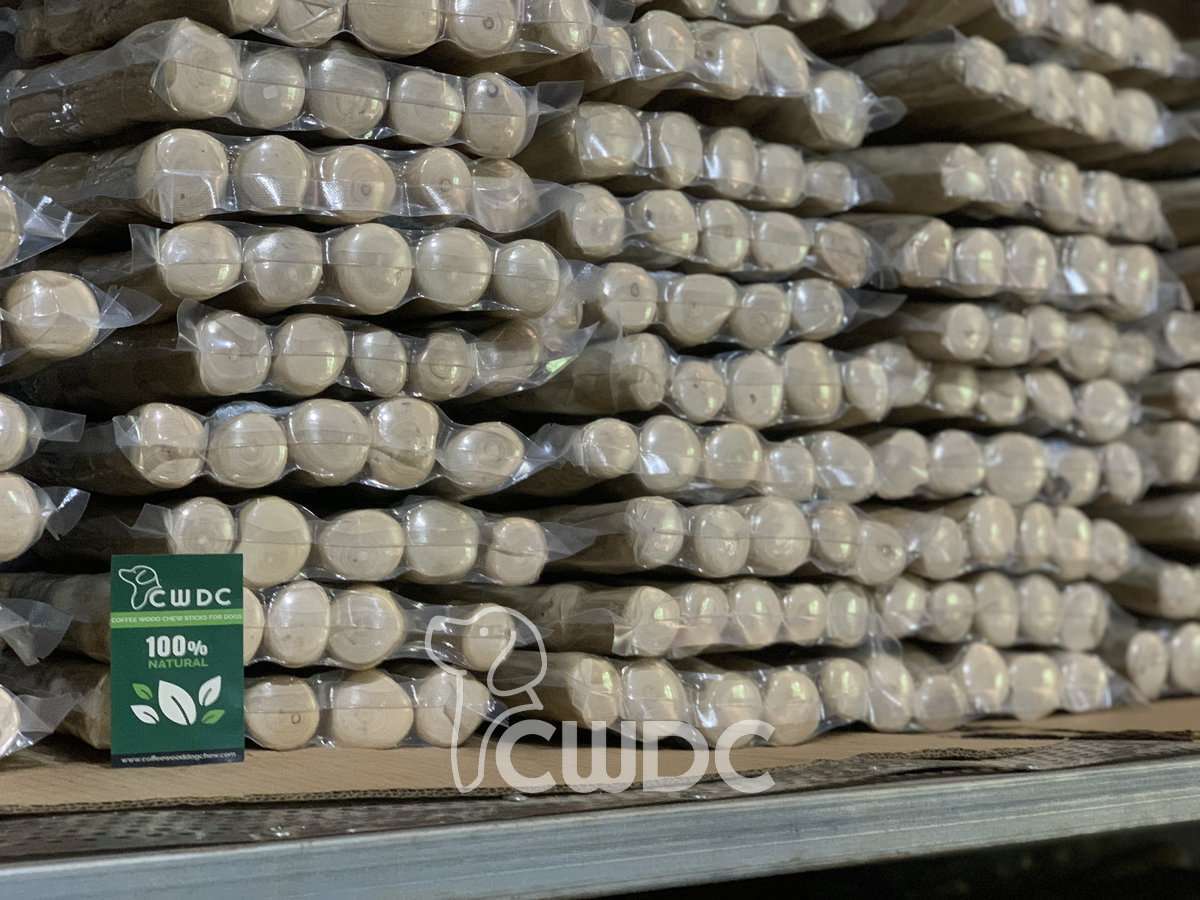
Most adult dogs receive a professional dental cleaning once a year at best, and many go longer between visits due to cost, the need for anesthesia, and the logistical complexity of scheduling veterinary procedures. In the intervals between cleanings, plaque builds up on tooth surfaces, hardens into tartar, and creates the conditions for periodontal disease, the most common health problem diagnosed in adult dogs. Chewing behavior addresses this problem naturally, and the material a dog chews on determines how effective that behavior is at protecting dental health.
Coffee wood dog chews from CWDC Vietnam provide a mechanical cleaning action when dogs chew that removes surface plaque from accessible tooth surfaces, particularly the lateral surfaces of the molars and premolars where food debris accumulates. Understanding how this works requires a brief look at canine dental anatomy and the biomechanics of chewing.
How Plaque Forms and Why It Matters
Plaque is a biofilm of bacteria that adheres to tooth surfaces continuously. In a dog’s mouth, plaque begins accumulating within hours of eating and reaches significant thickness within a day or two if not disrupted. Left undisturbed, the minerals in saliva cause plaque to harden into tartar, also called calculus, which cannot be removed by brushing or chewing and requires professional scaling to eliminate.
The consequences of tartar accumulation extend well beyond cosmetic concerns. Periodontal disease, which affects the gums, ligaments, and bone supporting the teeth, begins when bacteria in plaque and tartar cause chronic inflammation in the gum tissue. Advanced periodontal disease results in tooth loss, chronic pain, and bacterial load that can affect systemic health. Studies in veterinary medicine have identified correlations between severe periodontal disease and organ damage in dogs, particularly to the kidneys and heart.
Disrupting plaque before it hardens is therefore the most practical goal of between-visit dental care. Mechanical disruption, whether through tooth brushing, dental chews, or natural chewing behavior, is the primary means of achieving this at home.
The Mechanical Action of Chewing on Coffee Wood

When a dog chews on a coffee wood chew from CWDC Vietnam, the fibrous structure of the wood creates a scrubbing action against the tooth surface. Coffee wood is dense enough to provide sustained resistance throughout a chewing session but fibrous enough to abrade rather than simply compress. The fibers separate under pressure and contact tooth surfaces including the areas near the gumline that are most vulnerable to plaque accumulation.
The chewing motion required to work through a coffee wood chew also stimulates saliva production. Saliva contains antimicrobial compounds including lysozyme, lactoferrin, and immunoglobulins that help regulate bacterial populations in the mouth. Increased saliva flow during and after chewing helps rinse debris from tooth surfaces and introduces these natural protective compounds to the oral environment.
The hardness of coffee wood plays a role in dental benefit that softer chew materials cannot replicate. Soft treats and chews are consumed quickly and provide minimal mechanical cleaning because they compress without creating the sustained surface contact needed to disrupt plaque. Coffee wood’s density means that a single chewing session can last 20 to 45 minutes for most adult dogs, providing extended mechanical cleaning time on each session.
Material Safety: What Coffee Wood Contains and Does Not Contain

Pet owners frequently ask whether coffee wood contains caffeine. The answer is no in any biologically significant quantity. Caffeine in the coffee plant is concentrated in the seeds (the coffee beans) and leaves; it is not present in the branch and trunk wood at levels that would affect an animal consuming the wood fiber produced during chewing. CWDC Vietnam’s coffee wood chews are made from the branch material of mature coffee trees, not from any part of the plant that concentrates caffeine.
No chemical treatments, preservatives, dyes, or surface coatings are applied to CWDC Vietnam’s coffee wood chews at any stage of production. The product is natural wood, dried and shaped, with no added substances of any kind.
Coffee Wood as Part of a Complete Dental Health Routine
Coffee wood chews are most effective when integrated into a consistent dental health routine rather than used as a standalone solution. Veterinary dental guidelines recommend a combination of approaches for maintaining oral health between professional cleanings: tooth brushing when the dog accepts it, dental chews or toys that provide mechanical cleaning, and regular visual monitoring of the gums and teeth for signs of disease.
Coffee wood addresses the mechanical cleaning component in a way that is more engaging for dogs than most alternatives. Because the natural scent and texture of wood activates a dog’s instinctive chewing drive, dogs typically engage with coffee wood chews willingly and at length, which is not always the case with dental chews that rely on flavoring to motivate use. A dog that chews consistently is a dog whose teeth are being cleaned more regularly.
Veterinarians consistently note that the most effective dental product for a given dog is the one the dog will actually use. Coffee wood provides both the mechanical properties needed for plaque disruption and the natural material properties that motivate sustained engagement.
Choosing the Right Coffee Wood Chew Size
Size selection matters for both safety and dental effectiveness. A coffee wood chew should be large enough that the dog cannot swallow it whole, and large enough that the dog must apply sustained lateral chewing force to work through it. This lateral chewing motion engages the carnassial teeth, the large shearing premolars positioned at the sides of the jaw, which are the most important teeth for dental health in most dogs and the teeth most prone to plaque accumulation.
CWDC Vietnam produces coffee wood chews in multiple sizes calibrated to dog weight ranges. Small chews are appropriate for dogs under 10 kg; medium chews suit dogs from 10 to 25 kg; large chews are designed for dogs 25 kg and above. For dogs that chew very aggressively and consume chews quickly, CWDC Vietnam also produces the Gorilla Coffee Wood Chew from older, denser wood with higher structural resistance.
Sourced From Vietnam’s Central Highlands
CWDC Vietnam sources coffee wood from Vietnam’s Central Highlands, one of the country’s primary coffee-growing regions. When coffee trees complete their productive lifecycle after 20 to 30 years of fruit production, they are repurposed into pet products rather than discarded. Each coffee wood dog chew represents an agricultural byproduct converted into a veterinary-relevant consumer product.
Support your dog’s dental health the natural way. Shop our Coffee Wood Dog Chew, read our story, and discover how to connect with our team.


