


If you own a parrot, cockatiel, or any pet bird, you already know the challenge: finding a perch that is safe, durable, stimulating. And looks good in your home. Most options on the market are plastic, metal, or soft wood that splinters too quickly. The Java Wood Bird Playstand from CWDC Vietnam offers something genuinely different.
Made from the branches of aged Robusta coffee trees grown in Vietnam’s Central Highlands, Java wood has become the gold standard for bird perches and playstands worldwide. Here is everything you need to know about why it stands out, and how to choose the right one for your bird.
What Is Java Wood? Why Is It Called “Java Wood”?
Java wood is simply another name for coffee wood, specifically, the hardwood from Robusta coffee trees (Coffea canephora) that are 20 years or older. The name “java” comes from the historic association of Southeast Asian coffee cultivation with the global coffee trade. In the pet industry, the terms “Java wood” and “coffee wood” are used interchangeably. And the product is the same.
At CWDC Vietnam, we source our Java wood from coffee farms in Vietnam’s Central Highlands, one of the most productive Robusta coffee-growing regions on earth. When coffee trees complete their productive lifespan after 20 or more years, they are replanted. The old branches, instead of being burned in the field, are harvested and crafted into bird playstands, perches. And enrichment products.
Why Java Wood Is the Best Material for Bird Playstands

Not all wood is suitable for birds. Pine and cedar contain harmful terpenes. Many treated woods carry chemical residues. Java wood avoids all of these issues while offering properties no other commonly available wood can match.
Exceptional Hardness
Java wood is a genuine hardwood. It withstands the powerful beaks of large parrots (macaws, cockatoos, African Greys) without splintering or breaking down quickly. Unlike soft woods that degrade within weeks, a well-crafted Java wood playstand lasts for years under regular use. Bird owners frequently describe it as the last playstand they ever needed to buy.
Natural Horizontal Growth Pattern
This is Java wood’s most distinctive feature in the bird world. Coffee tree branches grow naturally in a horizontal, multi-branched pattern with varying diameters and natural twists. This configuration perfectly mimics the irregular branches birds encounter in the wild. No other commonly used bird-safe hardwood grows in this pattern, making Java wood uniquely suited for playstands rather than simple straight perches.
Variable Diameter for Foot Health
A perch with uniform diameter forces a bird’s foot into the same position repeatedly, which can lead to pressure sores and bumblefoot over time. Java wood branches naturally vary in thickness along their length, encouraging birds to reposition their feet, exercise their grip. And maintain healthy foot musculature. This is one of the primary reasons avian veterinarians recommend natural branch perches over uniform dowel perches.
100% Natural and Non-Toxic
No chemical treatments, sealants, varnishes, or preservatives are applied to our Java wood bird playstands at any stage. The wood is scraped, sanded, and dried, nothing more. This means it is completely safe even for birds that chew aggressively on their perches, as all birds eventually do.
Sustainable Sourcing
Every Java wood playstand from CWDC Vietnam is made from wood that would otherwise become agricultural waste. By choosing a Java wood bird stand, you are supporting a circular economy model that benefits Vietnamese farming communities and reduces agricultural burning in the region.
Coffee Java Wood Bird Playstand vs. Other Materials
How does Java wood compare to the alternatives you may already be using?
vs. Plastic and metal perches: Plastic and metal perches have uniform surfaces that provide no grip variation and no opportunity for natural chewing behavior. They offer zero enrichment value beyond a place to stand and can cause foot problems over time. Java wood provides multiple textures, shapes, and surfaces for birds to explore and interact with.
vs. Rope perches: Cotton and sisal rope perches can be useful for foot health variety, but they degrade quickly under aggressive chewing, can unravel into loose fibers that wrap around toes and cause injuries. And require frequent replacement. Java wood requires no replacement on the same timescale and poses no entanglement risk.
vs. Manzanita wood: Manzanita is the most commonly cited alternative to Java wood in the US market. It is also a dense, bird-safe hardwood. However, manzanita grows upright and branches in a vertical pattern, which does not naturally produce the sprawling, multi-level perching structure that Java wood’s horizontal growth provides. Java wood playstands offer more usable surface area and a more natural configuration for most parrot species.
How to Choose the Right Java Wood Bird Playstand Size

Selecting the correct size is critical for both safety and engagement. The key rule: your bird should be able to grip a perch comfortably without its toes overlapping by more than 25 percent of the way around the branch.
Small birds (budgies, canaries, finches, parrotlets): Smaller playstand configurations with thin branches and closer perch spacing. These birds need a secure grip without overextending their toes.
Medium birds (cockatiels, lovebirds, conures, small Amazons): Mid-size stands with multiple branch levels and moderate branch diameter. These birds are active explorers, multiple levels and variable heights keep them engaged for longer sessions away from the cage.
Large birds (macaws, cockatoos, African Greys, large Amazons, Eclectus): Heavy-duty stands with thick main branches, a wide stable base to prevent tipping. And wide spacing between perching levels to allow full wing extension and natural movement.
If your bird is an aggressive chewer, size up within their category. Java wood is durable, but a larger diameter branch will always outlast a thinner one under sustained beak pressure.
How CWDC Vietnam Sources and Crafts Each Playstand
The sourcing window for Java wood bird playstands is seasonal. Coffee trees are harvested during the replanting season (typically November through March) when farmers replace older trees with new ones. CWDC Vietnam secures its annual supply ahead of each season, working directly with farming communities in Vietnam’s Central Highlands under long-term sourcing agreements.
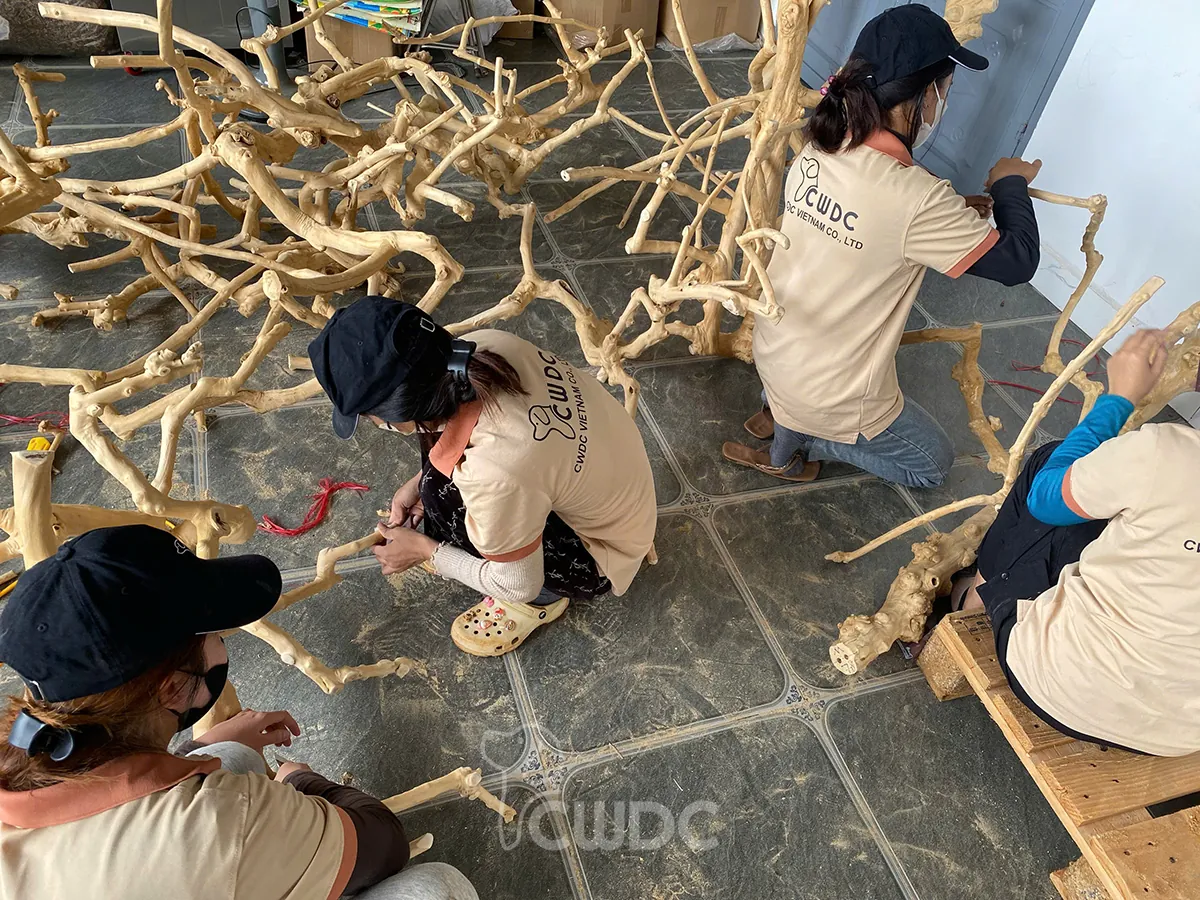
After harvest, branches are selected for size, shape, and structural integrity. Unlike products made from cut lumber, Java wood playstands require intact natural branches, the shape cannot be replicated by cutting or laminating. Selected branches are cleaned, scraped of loose bark, sanded smooth, and air-dried to the appropriate moisture level. No two playstands are identical. The natural growth of each coffee tree produces a unique branch structure, making every Java wood playstand from CWDC Vietnam genuinely one of a kind.
Java Wood Perches for Cage Mounting
In addition to full playstands, CWDC Vietnam produces individual Java wood perches for cage mounting, ideal for bird owners who want to introduce natural wood texture and variable diameter into an existing cage setup without committing to a full playstand. These perches are available in multiple sizes and lengths to suit different cage dimensions and bird species.
Java wood is also used for artificial tree arrangements, decorative structures that serve simultaneously as home decor and functional bird enrichment. These pieces appeal to bird owners who want a natural, organic aesthetic in their living space while giving their bird a permanent climbing and perching environment outside the cage.
Frequently Asked Questions
Is Java wood safe for all bird species?
Yes. Java wood is non-toxic and contains no compounds harmful to any commonly kept pet bird species, including all parrot species, parakeets, canaries, finches. And softbills.
How do I clean a Java wood bird playstand?
Wipe down with a damp cloth or rinse under running water. Allow to dry fully before returning your bird to the stand. No harsh chemicals or disinfectants are needed, they can damage the wood surface and may leave residues that are unsafe for birds to contact or chew.
Will my bird chew through the playstand?
All parrots chew. Java wood is significantly more resistant than soft woods, but some surface wear is normal and is part of the natural enrichment process. Large macaws and cockatoos with exceptional beak strength will eventually wear down any wood over time. This is expected behavior, not a product defect.
Can Java wood be used outdoors?
Java wood performs best indoors or in covered outdoor aviaries. Prolonged direct exposure to rain will accelerate wear. In a dry, covered outdoor setting it performs well and weathers naturally without degrading structurally.
Wholesale and OEM Availability
CWDC Vietnam supplies Java wood bird playstands to pet retailers, bird specialty stores. And wholesale importers worldwide. OEM and private label production is available for buyers who require custom sizing, branding, or packaging specifications. Given the seasonal nature of Java wood sourcing, early inquiry and forward ordering is strongly recommended for buyers planning seasonal inventory commitments.
Ready to give your bird the enrichment it deserves? Shop our Java Wood Bird Playstand, learn About CWDC Vietnam, and see our quality certifications.


