


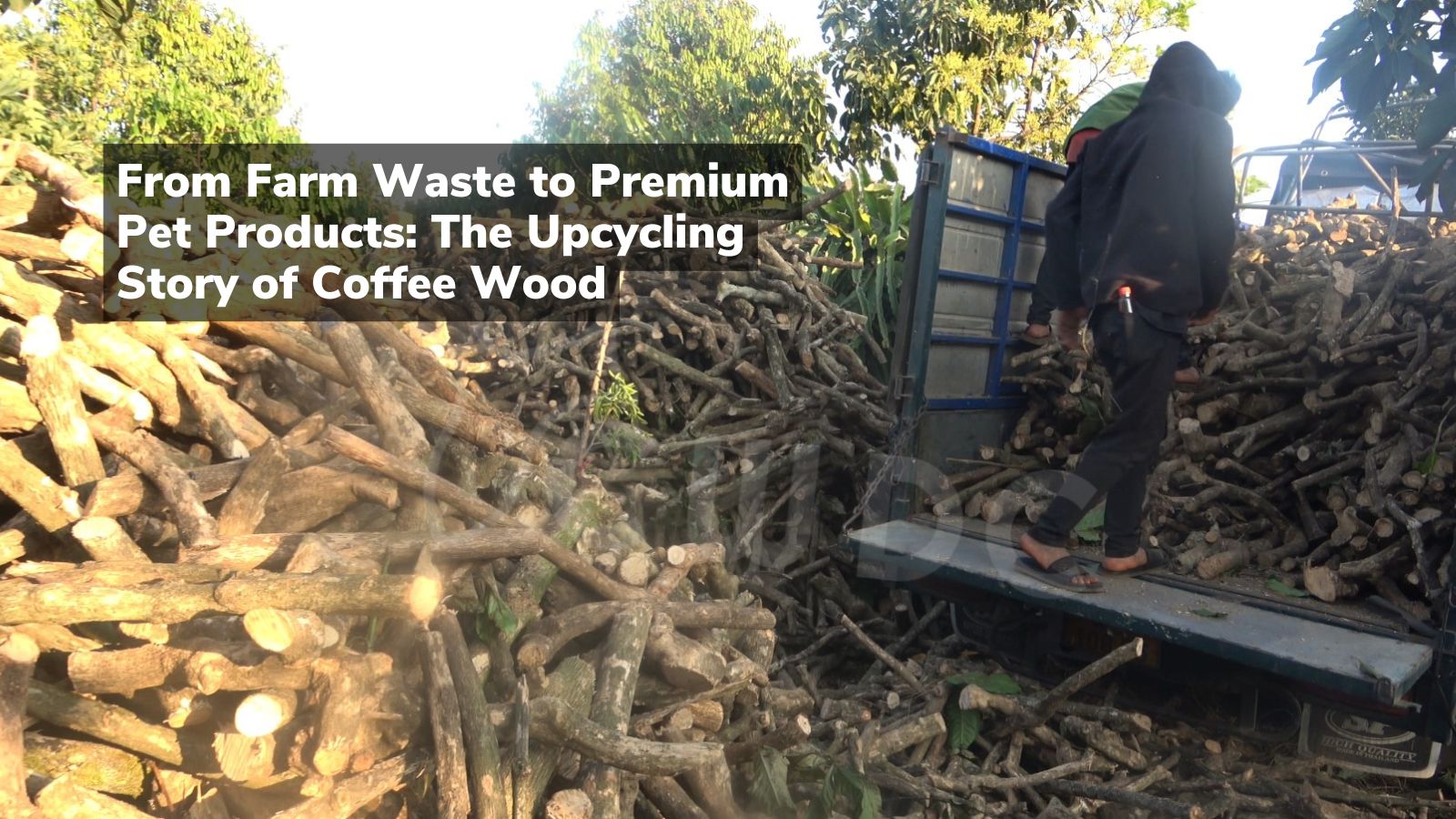
In the world of sustainable pet products, few innovations are as impactful, or as inspiring, as the transformation of discarded coffee wood into premium dog chews. This unique upcycling process not only gives new life to a natural material that would otherwise be wasted but also helps pet owners provide their dogs with a safer, more eco-conscious chewing option.
The journey of coffee wood from farm waste to a valued pet product is a compelling story of environmental responsibility, rural development. And creative manufacturing, one that CWDC Vietnam proudly leads.
Coffee farming is a major agricultural industry in Vietnam, one of the world’s top coffee exporters. Coffee trees typically begin to lose productivity after 20-30 years, leading farmers to replace aging trees with young, high-yielding saplings.
Traditionally, the wood from these old trees had limited value and was often burned, left to rot, or discarded as agricultural waste. This created both an environmental burden and a missed opportunity. However, with the rising demand for natural, sustainable pet products, CWDC Vietnam recognized the hidden potential of this tough, dense, naturally splinter-resistant wood.
The upcycling process begins the moment farmers remove old coffee trees during the replanting season. Instead of discarding the logs, CWDC Vietnam purchases and collects them directly from local farms across the Central Highlands.
This not only reduces agricultural waste but also creates stable income opportunities for ethnic minority communities who rely heavily on coffee farming.
Once brought to our processing facilities, the coffee wood undergoes a strict cleaning, trimming. And smoothing process to remove bark, eliminate impurities, and ensure complete safety. What was once agricultural residue is transformed into smooth, durable, non-toxic chew sticks that meet international quality standards.
The exceptional characteristics of coffee wood make it ideal for natural dog chews. Its density allows it to withstand extended chewing, while its unique fiber structure causes it to break down into soft, brush-like strands rather than sharp splinters. This makes coffee wood chews significantly safer than many conventional woods or synthetic chew toys. Dogs not only enjoy gnawing on the mildly textured wood, but they also naturally clean their teeth as the fibers act like a toothbrush, supporting oral health without any added chemicals or artificial ingredients.
Upcycling coffee wood delivers benefits far beyond the pet industry. Environmentally, it reduces waste, lowers carbon emissions from burning discarded wood. And supports circular-economy practices. Socially, it creates new income streams for rural households and encourages more sustainable forestry and farming habits. Economically, it helps diversify the agricultural ecosystem while meeting global demand for safe, natural pet products. This multi-layered value chain is what makes coffee wood such a remarkable example of turning a problem into a solution.
Today, coffee wood dog chews have become a global trend, prized by eco-conscious pet owners who want to give their dogs a healthier alternative to rawhide, antlers, plastic toys. And synthetic chews. And at the center of this movement stands the upcycling innovation pioneered by companies like CWDC Vietnam. Through responsible sourcing, ethical manufacturing, and a commitment to sustainability, coffee wood is no longer treated as agricultural waste, it has been elevated to a premium pet product that benefits dogs, farmers. And the planet alike.
Giving discarded coffee wood a second life as a premium pet product is at the heart of what we do. Explore our Coffee Wood Dog Chew collection and experience the upcycling story in every natural chew, read more about our mission to create zero-waste pet products, and learn about us, the family-run team turning farm by-products into beloved pet enrichment.


